2.21 · Proof of concept · Connect
Sanford Interchange Real
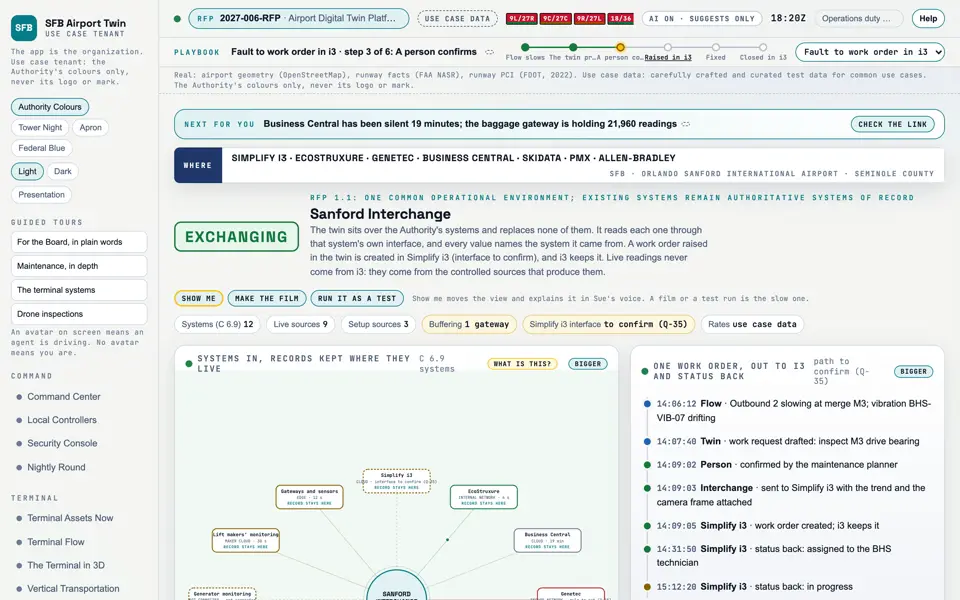
Every Authority system through one hub, each still the record of what it owns, with a work order going to Simplify i3 and its status coming back.
Picture: Headless capture of poc/index.html?v=interchange&m=light, as the proof of concept renders it, 1400 by 875 at 2x scale.
Screen · Proof of concept · Connect
Every Authority system through one hub, each still the record of what it owns, with a work order going to Simplify i3 and its status coming back.
- Sources
- Interchange
- Twin
- Screens
- Plan
- Kind
- Screen
- Status
- not linked
- Airport layer
- Screens: the POC story and the spines
- Airport area
- not linked
- System
- not linked
- Sensor type
- not linked
Open the screen · Open the detail
Level 2 of 3 This component, complete on its own. Its files, sources and tests are the detail below. Open the detail
Open this screen in the proof of concept
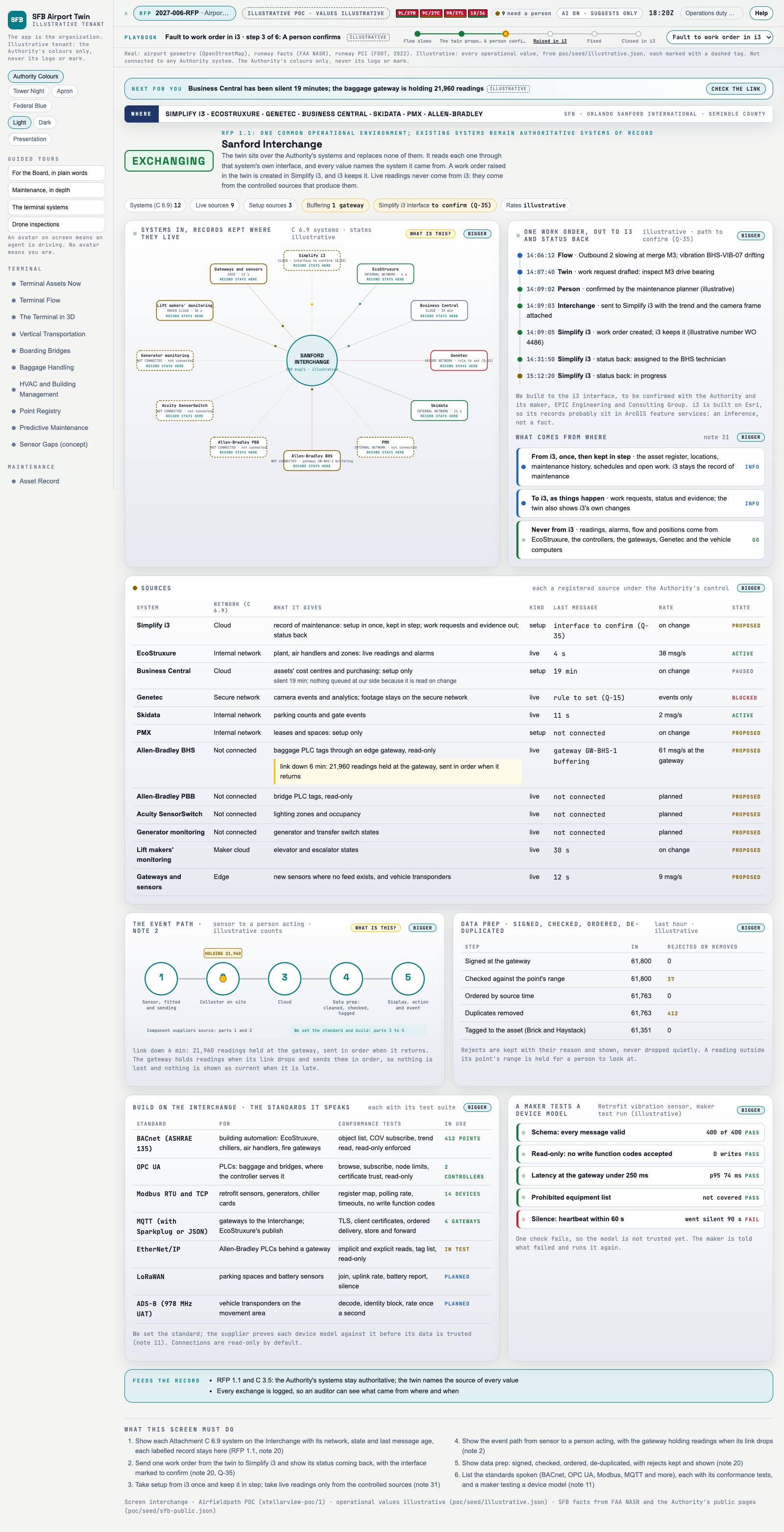 Capture of the screen: Sanford Interchange. Dark and light modes.
Narration line
Live readings come from the controlled sources that produce them, never from i3.
Source: poc/bearings/interchange.json, beat "Where live data comes from"
- Group
- Connect
- Status as the app labels it
- Real
- Basis
- The screen runs. Data: carefully crafted and curated test data for common use cases.
What the screen must do (6)
- Show each Attachment C 6.9 system on the Interchange with its network, state and last message age, each labelled record stays here (RFP 1.1)
- Send one work order from the twin to Simplify i3 and show its status coming back, with the interface marked to confirm (Q-35)
- Take setup from i3 once and keep it in step; take live readings only from the controlled sources
- Show the event path from sensor to a person acting, with the gateway holding readings when its link drops
- Show data prep: signed, checked, ordered, de-duplicated, with rejects kept and shown
- List the standards spoken (BACnet, OPC UA, Modbus, MQTT and more), each with its conformance tests, and a maker testing a device model